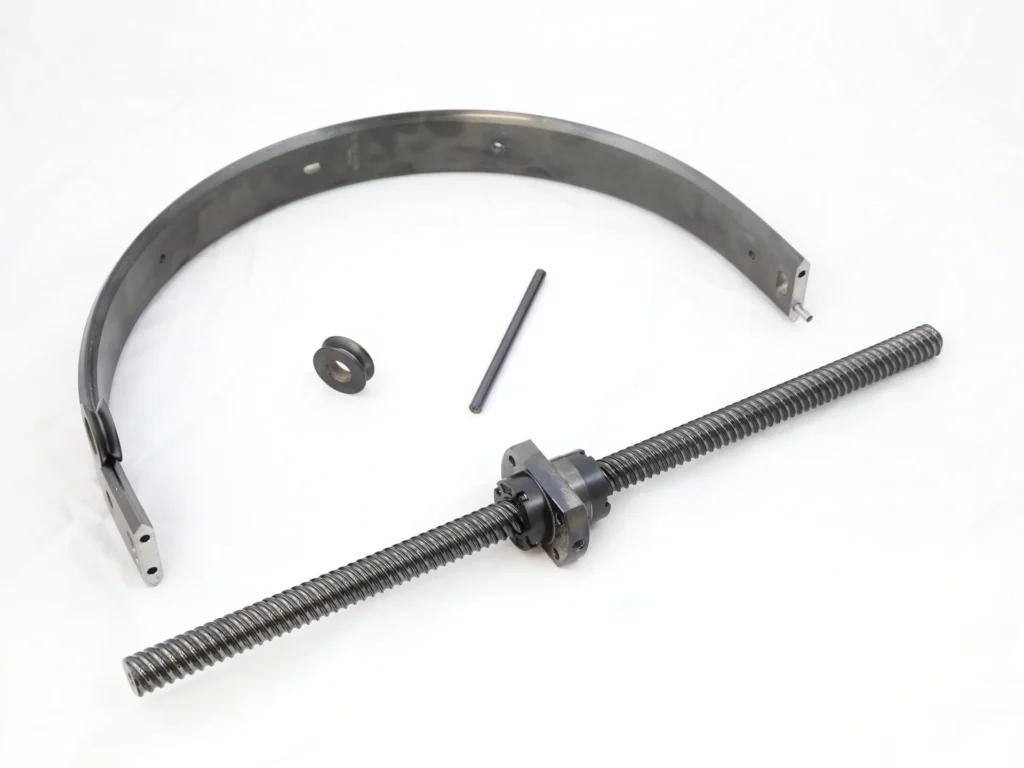


Diamondplating – High-performance coating for maximum wear and corrosion protection
Originally developed from aerospace technology, Diamondplating combines exceptional hardness, anti-adhesion properties, and outstanding corrosion resistance.
This multifunctional industrial coating from PGM Motion significantly extends the service life of components without recoating, without maintenance, and without compromise. It is the ideal hard chrome alternative.
Whether for machine components, tools, or precision parts, Diamondplating ensures maximum durability, consistent performance, and low-maintenance operation even under the most demanding conditions.
What is Diamondplating?
Diamondplating is a multi-layer high-performance coating that combines the advantages of several coating technologies:
- Non-stick coating for clean, low-friction surfaces
- High-temperature resistant coating with excellent chemical stability and waterproof, impact-resistant, and flexible surface protection
This combination forms an ultra-hard protective layer with outstanding resistance to corrosion, abrasion, chemicals, and environmental influences – making it ideal for high-temperature applications in demanding industrial production environments.
Effective corrosion protection for extreme conditions
The corrosion protection provided by Diamondplating significantly exceeds that of conventional coating methods.
The coating is highly resistant to moisture, aggressive media, and temperature fluctuations, making it ideal as a heat-resistant corrosion protection for thermally and chemically demanding applications.
Whether used in the chemical industry, mechanical engineering, or offshore installations, Diamondplating delivers reliable protection where standard coatings fail.
Your advantages with our specialty coating:
- Excellent protection against rust and moisture
- Reliable performance even under fluctuating temperatures
- High adhesion strength and dimensional stability
- Significantly extended service life of components
Anti-adhesive and wear-resistant coating for precision industrial systems
Thanks to its low coefficient of friction, Diamondplating prevents dirt, dust, and production residues from adhering to surfaces. This significantly reduces cleaning effort, energy consumption, and wear during operation.
The extremely hard surface layer provides outstanding corrosion resistance and protects components from material fatigue even under intensive use. As a result, Diamondplating is ideally suited for moving and highly stressed components such as linear guides, rolling bearings, housing components, or tools exposed to high load cycles.
Typical application areas
- Mechanical and plant engineering – wear protection and corrosion prevention
- Food and packaging technology – clean, hygienic anti-stick surfaces that reduce residue buildup
- Chemical and pharmaceutical industries – reliable protection against aggressive media and chemicals
- Automation technology – maintenance-free, heat-resistant surfaces
- Aerospace industry – lightweight, highly durable components with extreme resistance
Conclusion: Diamondplating – Protection, precision, and durability combined
With Diamondplating, you receive a multifunctional high-performance coating that effectively prevents wear, corrosion, and material adhesion.
The combination of anti-stick properties and extreme surface hardness creates a highly durable protective layer with exceptional corrosion resistance – even under high temperatures and exposure to aggressive chemicals.
In short: The long-term solution for waterproof, heat-resistant, and wear-resistant industrial coatings.
FAQ about diamond plating
1. How does Diamondplating differ from conventional coatings?
Diamondplating combines multiple protective mechanisms in a single multilayer system – anti-stick properties, wear protection, and corrosion resistance. Unlike traditional processes such as hard chrome or Teflon coatings, it provides an extremely hard, chemical-resistant surface with precise dimensional stability and long service life.
2. How resistant is Diamondplating to corrosion and heat?
Diamondplating is specifically engineered for use under extreme conditions. The heat-resistant corrosion protection performs reliably at high temperatures (up to 800 °C), as well as in environments with aggressive media or moisture exposure.
3. Can Diamondplating be applied to complex or curved components?
Yes, Diamondplating can be applied to a wide variety of geometries – from flat surfaces to complex components with internal bores or edges. The key requirement is careful surface preparation to ensure uniform coating distribution and optimal adhesion.
4. How long does a Diamondplating coating last?
With proper use and maintenance, Diamondplating can extend component service life by a multiple compared to untreated surfaces. The exact lifespan depends on application conditions and operating loads.
5. What advantages does Diamondplating offer over hard chrome or ceramic coatings?
- Higher resistance to wear and corrosion
- Superior adhesion with thin coating layers for dimensional accuracy
- Waterproof and heat-resistant surface with significantly extended service life
- Environmentally friendly alternative to traditional electroplating processes